I recently joined the UT Marine Geology and Geophysics field course on the Gulf of
Mexico to learn about methods to study the seafloor. When deployed at the fronts of
glaciers, these techniques can help us identify the stability of glaciers that end in
the ocean.
My research frequently draws on a wide variety
of disciplines to answer questions about glacier behavior. Seafloor sediments not only
reveal when a glacier last occupied a specific location, but rapid submarine sediment
accumulation can help to stabilize a tidewater glacier terminus. When a terminus is in
contact with a barrier of thick sediment, ice loss is decreased because the sediment can
shield the glacier terminus from warm ocean water and reduce the rate of stretching at
the glacier front. These topics are pertinent to the past, present, and future dynamics
of ocean-terminating glaciers.
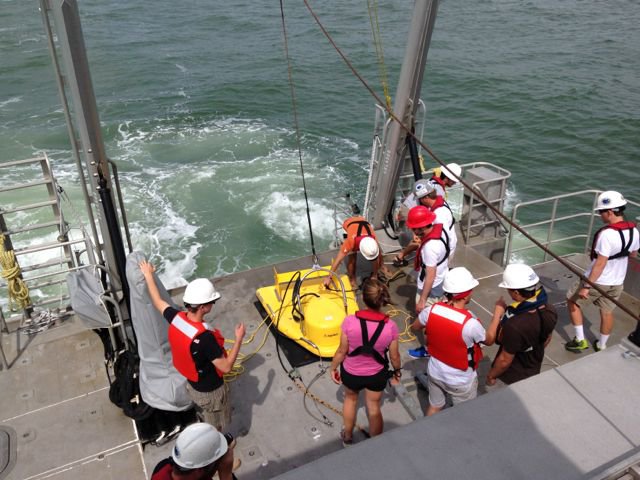
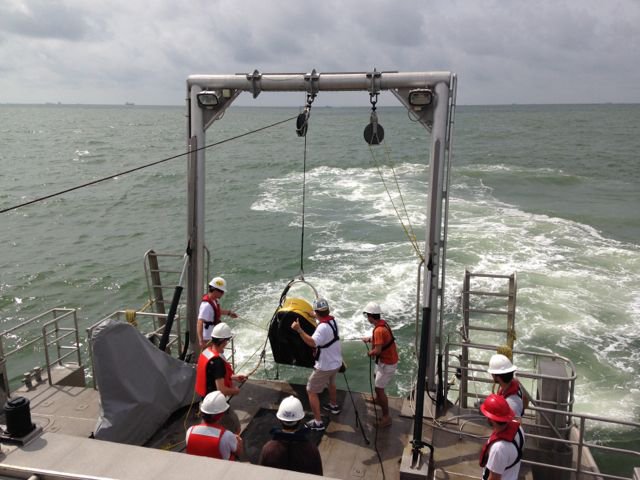
While based out of Galveston, TX, I joined the
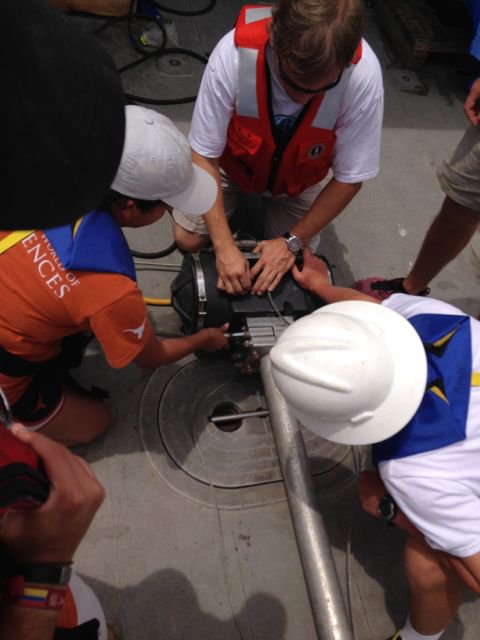
UT MG&G field course for two days on a Gulf of Mexico research vessel. We acquired
CHIRP and reflection seismic data to investigate the properties of the seafloor
subsurface at two different scales/resolutions (~cm resolution for ~10 m, and ~m
resolution for ~100 m). We also took vibracore samples of the top meter or so of the
seafloor. Not only did I learn a great deal about the capabilities of these techniques,
I had a lot of fun. Thanks to Dr. Sean Gulick, Dr. John Goff, Marcy Davis, and Dan
Duncan for welcoming me to their program.
I look forward to including these
techniques in future research to better understand the dynamics of tidewater glaciers in
Greenland, Alaska, and elsewhere.